Die Masterbandserie der AAA wird um drei Titel erweitert!
In bekannter Spitzenqualität und wieder auf höchstem musikalischen Niveau bietet die AAA in Zusammenarbeit mit Quintonrecords drei neue Titel aus der Masterbandserie. Die Titel können jetzt schon zu den gleichen Konditionen bestellt werden, die Auslieferung erfolgt sukzessive. Abo- Inhaber haben die Möglichkeit, ihr Abo um diese drei Titel zu erweitern. Hörproben kommen demnächst. Die Cover öffnen sich nach dem Anklicken auf die volle Größe.
"Snow Owl"
Snow Owl | Greg Osby | Edward Simon | Antonio Sanchez (on tour)
tracks
1. Touched
2. The Summon
3. Los Ojos del Siego
4. Bassically Minor
5. Summertime Blue
-----
6. Uncertainty
7. Ozthetica
8. Blues For Krampus
9. Milagros, lagrimas y el destino
“A life of sound is a destined miracle of tears. In shakespearean legend an owl’s shriek foreshadowed the passing of a soul. In my case, the opposite occurred.It was a white owl that touched and guided my spirit from the far planes of eternity into earth’s physical realm.The white feathered guardian has summoned me here to speak the language of creation…to speak music.”
The Snow Owl
producer's notes
If you think about the individual sound of an electric bass player, there are not too many that you will recognize instantaneously. Eberhard Weber, Steve Swallow and of course Jaco Pastorius are great examples. This leads us straight to Juan “Snow Owl” García-Herreros. He sounds different, too. He can sound very low, but on the other hand can make his instrument sing and sound like a flamenco guitar. These two opposites might be influenced by his South American roots: He was born in Bogota/Colombia, where the Indians of the Andes called him "The Snow Owl", but grew up in the melting pot of New York, where he mixed up all of the different musical styles he had heard, studied and performed: Blues, Funk, Jazz, Heavy Metal, Rock, Salsa - you name it... But what really makes the Snow Owl different is his own personal way of talking to people, and it is this open-hearted communication that you can hear in every single tone. Here, the vehicle to communicate is not only his instrument but his entire quartet.
Just listen...
lineup
Snow Owl - six string electric contrabass guitar
Greg Osby - alto and soprano saxophones
Edward Simon - grand piano, synthesizers
Terri Lyne Carrington - drums, percussion
The Band
Snow Owl - Juan Garcia-Herreros was born in Bogota, Colombia. The name Snow Owl was given to him at birth by the leader of his tribe. He came to United States and arrived in New York City at age nine. He received a coveted scholarship to attend the prestigious Berklee College Of Music in Boston. Juan studied at Berklee with worldrenowned bass instructors Bruce Gertz and Oscar Stagnaro. By age 21 he returned to New York City to pursue a professional music career. While in New York, Juan developed the ability to meet the demands of multiple styles. Whether the musical genre is Funk, Salsa, Straight Ahead, Modern Jazz, Heavy Metal or Avantgarde, he is capable of participating without any compromise. He has performed as a sideman with an impressive list of musicians including Thomas Lang, James Spaulding, Miguel Zenón, Yusveny Terry, Anton Denner, Oscar Hernandes, Roberto Quintero, Mark Whitfield, Michael Stuart and many others. The “Snow Owl Quartet” is his debut record as a leader.
Greg Osby - Saxophonist, composer, producer and educator Greg Osby has made an indelible mark on contemporary jazz as a leader of his own ensembles and as a guest artist with other acclaimed jazz groups for the past 20 years. Notable for his insightful and innovative approach to composition and performance of original jazz music, Osby is a shining beacon among the current generation of jazz musicians. He has earned numerous awards and critical acclaim for his recorded works and passionate live performances.
Edward Simon - Born in Cardón, Venezuela, Edward Simon arrived on the jazz scene in New York performing in a trio led by bassist Charles Fambrough. The steady gig garnered him a reputation as a pensive, rhythmically-astute player, which caught the ear of noted musicians Greg Osby, Kevin Eubanks, and Bobby Watson, all of whom hired Simon. He toured with Watson’s Horizon band for five years while juggling dates with established jazz players like Jerry Gonzales, Herbie Mann, Paquito D’Rivera and Terence Blanchard.
Terri Lyne Carrington - World-renowned drummer, composer, producer and clinician, Terri Lyne Carrington, has maintained her status in the industry as a person to watch for over 20 years. Terri developed a reputation as a child prodigy, jamming with jazz veterans Dizzy Gillespie, Rahsaan Roland Kirk, Oscar Peterson, Joe Williams, and many more. She recorded along with Joni Mitchell, Stevie Wonder and was touring with Herbie Hancock’s both his electric and acoustic bands. Right now she takes a time out from touring, concentrating on teaching in the Berklee College Of Music.
Nouvelle Cuisine featuring Christian Kronreif - Mozart Revisited
(JazzFirst award winner 2005. A project of ErsteBank, Jazzzeit and Quinton)
tracks
1. Lydian Angel
2. Priest
3. Turcabeat
4. Searching For Don
-----
5. Lullaby
6. Figure It Out!
7. Preachin'
8. Bitter Flames
What the Nouvelle Cuisine thinks about Mozart … an interview.
What makes Mozart's music so special?
Cech: As a young piano student I was confronted with the Mozart sonatas, but I actually preferred playing Haydn. I didn't tell my piano teacher that, because instinctively I suspected that in Austria – or maybe even world-wide – you just don't criticise Mozart. And his "Requiem" is one of the most intense pieces of music I know
Mühlbacher: I've known some of Mozart's music since I was a young child. I'm sure I played one or two of his minuets on the piano. I heard the "Magic Flute" for the first time when I was six years old... Now, when I hear or see works by this great master, I always have to tip my hat to him. The speed at which he composed must have been incredible as well – he packed a great deal into a very short time! I suspect that he had all the musical building blocks he could conceive of in his head and at his disposal at all times – which is a brilliant achievement in its own right.
Kronreif: When I was nine I played the clarinet while wearing a Mozart wig. Whether it was a childhood dream or trauma, I can't say. Even before that (with the recorder...) and particularly afterwards he was a constant companion in my musical training.
A Mozart project like this one, which refrains from simply reproducing his music, is always a tightrope walk. The question is not so much what Mozart was, but rather what he would probably be today. So the real question is: "How would he have liked this?" Mozart was definitely up on what was going on in his time – in other words, he was "hip", and with that spirit he would certainly be experimenting and "grooving" if he were around today.
What is your connection to the compositions you have chosen?
Cech: Since I had to grow up without being able to watch much television at home, the "Betthupferl" programme was the finale of what for me was always a much longed-for afternoon of sitting in front of the boob tube at my grandfather's. The flickering black-and-white screen with the fidgety figures trying to jump around to Mozart's music sent pleasant shivers down my spine, all of which was abruptly interrupted by the command that it was time to go home. The "alla Turca" picked up a lot of drive when I played it – at least in the beginning, before I broke my tender young fingers on the octaves. Jupiter is Jupiter, and my fourth will be my bonus track. I'll read the biography before I make a decision...
Mühlbacher: I selected several pieces or passages that have long meant something to me. I found the march of the priests from the "Magic Flute" while I was looking for forms that were – at least partially – self-contained. It's something like a beautiful pop song – a potential standard, as it were.
I found the beginning of the overture to "Don Giovanni" while looking for dramatic material (that's just my nature). There's such an incredible amount of excitement and suspense right in the first 30 bars! Besides, is it possible that this was the source for Morricone's theme music to "Once Upon A Time in the West"? There's so much to play with here!
The duet by Papageno/Papagena, on the other hand, is an incredible example of acceleration. And the intensity of the "Requiem" is simply phenomenal!
How can a big band as an instrument transport Mozart's distinctive soundscape?
Cech: Actually, a big band as an instrument can not transport Mozart's distinctive soundscape at all... But it's not the soundscape that is important; it's the themes and the extraordinary flow of Mozart's melodies, which develop with a fascinating effortlessness within the tight constraints of the music's courtly cadences. It's all so gossamer-fine.
Mühlbacher: The basic difficulty of this undertaking is the fact that W. A. Mozart's music is constantly developing and evolving, never staying in the same place. A big band with soloists, on the other hand, needs a broader musical space to be able to stretch out – especially in the case of improvisation and solos. In this sense, the master did not accommodate us at all. So that's where our job started... We can replicate the broad orchestral string sound to a point with other instruments – except for the danger of running out of breath. But that can be remedied with a synthesiser-type instrument, a guitar or adding some reverb in the mixing process... And we definitely have the rhythmic component in our favour – the groove factor!
What Mozart clichés – musical or personal – bother you most?
Cech: Mozart's time was a period when the music was forever leading into cadences, and that's tough for someone as counterpoint-oriented as me. There's nothing about Mozart as a person that bothers me. I think he was a likeable, humorous, lively person, but probably that in itself is a cliché... What bothers me about the whole Mozart hubbub is that he is the "consensus composer": even boring, unmusical, BMW-driving manager types and their pearl-draped women love Mozart's music and find it so wonderfully soothing.
Mühlbacher: It bothers me that a genius of this calibre ended up in a pauper's grave. Not that I think he would be more comfortable in a different one – it just tells us that he couldn't really make a decent living from his music. And now it's being flogged so mercilessly that it can make you sick!
Kronreif: Bothersome are Mozart's melodies and musical quotations in a condensed form – especially prevalent in Salzburg but also widespread in Vienna – during the season of the Japanese tourists. But it's not the fault of the Japanese... Furthermore, despite the millions spent on tourism, the legacy of Mozart is unfortunately not that people in Salzburg are – or are able to become – especially musical or artistic. Millions for tourism instead of a cultural heritage. And in summer, when I see all the faux Wolfgangs standing around in the downtown areas of Vienna and Salzburg, grovelling in front of all the tourists, I sometimes have to cry – or laugh. But it's their own fault if they go along with it...
Do you like Mozart Kugeln?
Cech: Yes, of course – damn – where can I get my hands on one now.....
Mühlbacher: Sure! But a single one seems to take care of my sugar needs for a while...
Kronreif: I grew up practically next door to the original factory. They're a bit cheaper there...
What should Austria do in order to transport Mozart – and not just a caricature suitable for tourism purposes?
Cech: Get Mozart out of all the shops and go easy on performing his music for a while. The Salzburg Festival should consist only of music composed after 1945.
Mühlbacher: Produce CDs like this one!
There's Mozart and Falco, but who is missing as a true Austrian music star?
Cech: My star is Schubert.
Mühlbacher: ?
Kronreif: There's too much creative potential for just one name!
Do you have one favourite Mozart work you would take with you to a desert island?
Cech: If I could take something with me to a desert island, it certainly wouldn't be a CD player. I would take a musical clock with "Eine Kleine Nachtmusik" and spend years training a monkey to operate it while giving me a light.
Mühlbacher: The "Requiem".
Kronreif: That's difficult, like with a lot of the great masters. Every work has passages that make it a favourite.
lineup
Sascha Otto – flute, alto flute
Clemens Salesny – alto saxophone, clarinet
Romed Hopfgartner – soprano saxophone, alto saxophone, clarinet
Christian Kronreif – tenor saxophone
Manfred Balasch –tenor saxophone, flute, bass clarinet
Bernhard Brunmair – baritone saxophone, clarinet
Christoph Walder – french horn
Balduin Wetter – french horn
Aneel Soomary – trumpet
Andi Pranzl – trumpet
Martin Ohrwalder – trumpet
Walter Fend – trumpet
Gerd Rahstorfer – trumpet
Werner Wurm – trombone
Martin Ptak – trombone
Daniel Riegler – trombone
Charly Wagner – bass trombone
Cyriak Jäger – bass trombone, tuba
Hans Georg Gutternigg – tuba, ophikleide
Christoph Cech – piano, composer, arranger
Alex Machacek – guitar
Tibor Kövesdi – electric bass
Raphael Preuschl – double bass
Lukas Knöfler – drums
Christian Mühlbacher – percussion, composer, arranger
Karl Petermichl – electronics
Linda Sharrock - Confessions
(Nominated "record of the year" by the jury of "Hans-Koller-Preis 2005")
tracks
1. Sometimes I Feel Like A Motherless Child
2. Goodbye
3. You Didn't Know Me
4. Sable
-----
5. Ooh Boy
6. Prayer
7. Clair Obscur
8. Suddenly
9. You Said You Love Me
producer's notes
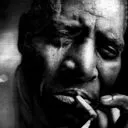
At the first glance, Linda Sharrockís music might seem shy. No mainstream. But listen again: Beautiful melodies, most sensitive rhythms. A very special pulse. Linda Sharrock has never been a typical singer. Much more she is a great lyricist, captivating her audience with a vocal performance that is unique. The very own aesthetics of a singer/songwriter capable of telling stories in her own, special way.
These "confessions" are beyond time, they are urbane and personal.
Confessions. The "Black Diva" at her best.
lineup
Linda Sharrock
Stephan Oliva
Claude Tchamitchian